Repugnicants aren't just liars - they are buffoons.
So, by the way, is anyone who would vote for them.


Friday, Oct 30th, 2026 ~ Patti Varol
1 day ago

Why do many single filers face zero tax liability? One reason is that single filers tend to be younger and earn lower incomes than married filers—especially single parents who file as head-of-household. As a result, married taxpayers pay roughly 75 percent of all federal income taxes, despite filing only 40 percent of returns.
Again, he doesn't cite the source, but these are familiar numbers. They come from a botched 1992 Bush administration study, a study that was immediately ridiculed and that its authors would just as soon forget,
This is why: The study tracked the number of people who had paid income taxes in each of the years from 1979 to 1988. Since only about half the working population actually paid taxes over the entire period, this meant that the study was already biased toward tracking the relatively successful. And then these earners were then compared to the population at large.
More generally, it's just real hard sometimes for those of us who pay a lot of attention to politics to get around the idea of how little attention most others pay, including the broad category of those who vote most of the time . . .
1) Democracy assumes an intelligent and informed electorate. Without it, we get what you are describing. Which is why democracy is failing in this country. Maybe that is why, historically, democracies have a finite life time.
2) Life is hard. After a day of slinging whatever from 9 to 5, parent teacher confs. and all the other stuff of life, the universe, and everything, who wants to think about something as arcane and intrinsically difficult as politics? Especially when the BIG GAME is on. Ergo, no. 1.
3) With international corporations so much in control of both parties, it's pretty easy to think "There's not a dime's worth of difference." This makes apathy a pretty inviting option. Ergo, no.1.
4) There is so much deliberate misinformation: Obama is an Arab Nazi socialist, Bush tax cuts didn't increase the deficits because they lead to a (god help us) "vibrant" economy; that finding real information and sorting wheat from chaff takes considerable effort. Ergo, no.1.
Aren't we kinda screwed?
JzB
One of the embarrassing dirty little secrets of economics is that there is no such thing as economic theory properly so-called. There is simply no set of foundational bedrock principles on which one can base calculations that illuminate situations in the real world. Biologists know that every cell runs off instructions for protein synthesis encoded in its DNA. Chemists start with what the Heisenberg and Pauli principles plus the three-dimensionality of space tell us about stable electron configurations. Physicists start with the four fundamental forces of nature. Economists have none of that. The "economic principles" underpinning their theories are a fraud--not bedrock truths but mere knobs twiddled and tunes so that th right conclusions come out of the analysis.
What are the "right" conclusions? It depends on what type of economist you are, for three are two types. One type chooses, for non-economic and non-scientific reasons, a political stance and a political set of allies, and twiddles and tunes their assumptions until they come out with conclusions that please their allies and their stance. The other type takes the carcass of history, throws it into the pot, turns up the heat, and boils it down, hoping that the bones and the skeleton that emerge will teach lessons and suggest principles that will be useful to voters, bureaucrats, and politicians as they try to guide our civilization as it slouches toward utopia. (You will not be surprised to learn that I think that only this second kind of economist has any use at all.)

I read the info on 1 not a prime and am deeply underwhelmed. Unless I'm missing something big, the reason that 1 is not a prime is that mathematicians have conspired, in a completely arbitrary and discriminatory fashion, to deprive 1 of primehood, by including in the prime definition "greater than 1." If you take a prime to be a number divisible only by 1 and itself, 1 clearly qualifies. Granted it's the degenerate case (chemists will understand what this means) but that really makes no difference.
Answer 1:
My point exactly: by definition, with no serious reasoning. It's a totally unconvincing word game, and totally lame.
Answer 2:
Re: the fundamental theorem - the word "uniquely" is the kicker here. But that is still just word play. Tacking on any number of "x1" factors is clearly redundant, and could be eliminated by a more elaborate and linguistically clumsy definition - which I will not attempt at the moment. BTW, this also illustrates what I meant by a degenerate case. All the infinite number of potential "x1"s collapse into a single "x1."
Actually, I'll go further and say that the fact that you can write the product non-uniquely is irrelevant to the fact that you can still write it with a single "x1" in the formula, and that THAT is a unique answer.
So we still do not have a really sound reason.
On the other hand, though, lets take another look at the fundamental theorem, "Every positive integer greater than one can be written uniquely as a product of primes." Ignoring the problematic "uniquely" for the nonce, clearly, if 1 is excluded from the primes, then this theorem crashes and burns. What are the factors of any prime, say, 5? They are 5 and . . . and 1! How can this simple fact not put a Q.E.D. on the primacy of 1?
Answer 3:
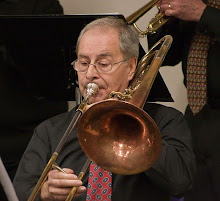
By the logic expressed there, I cannot be both a trombonist and a grandfather, though each is a subset of the set "real humans" - being a grandfather is sooo much more important. Really? A thing cannot belong to two sets at once? Five is both a prime and a Fibonacci number. This reasoning is embarrassingly fatuous.
Answer 4:
This seems to be just an elaborated restatement of definition 3.
Now it's possible that I'm missing something, but here is my verdict.
Reasons for excluding 1 from the primes boil down to, "It's not because I say it's not." I think that claim has no merit, and can be summarily rejected.
Reason for including 1 in the primes is that without it, the fundamental theorem turns out to be false. This is not really a big deal for me, but mathematicians will probably find it disconcerting.
Ergo, 1 is a prime.
Q.E.D.
When Dan Rather succumbed to the forged Bush war record hoax in 2004, CBS forced him into retirement. Breitbart is the conservative Dan Rather, but there will be no discredit, no resignation for him.
Instead, conservatives are consumed with a new snippets-out-of-context uproar, the latest round of JournoList quotations. Here at last is proof of the cynical machinations of the hated liberal media! As to the cynical machinations of conservative media — well, as the saying goes, the fish never notices the water through which it swims.